2025 Books in Review
Stats
This year I read 30 books. The majority (17) were fiction. Only 4 were physical paper books. The rest were audiobooks.
I usually listen to audiobooks when walking or riding the train. But sleeping a baby provided a new time window for listening to books. Unfortunately for my book consumption we now have a toddler and bedtime routine no longer lends itself to book listening.
11 of the books were part of a series, accounting for nearly 2/3 of the fiction I read this year.
Only 2 books were for the book club I am part of. The club meets 10x a year, and so I only read 1/5 of the books and I actually only attended the book club meeting once. Hoping to be a better member next year.
Themes
Trilogies
One theme this year was trilogies. I read three trilogies this year.

In the spring I read the Binti trilogy by Nnedi Okorafor. All the books in the trilogy are fun and also short. Teenage me could have finished all the books in a day. The books were fresh. Fast-paced, full of unexpected developments. Lots of fun. Do recommend.

In the summer I read the Winternight trilogy, by Katherine Arden. The mythology and history of the medieval Rus setting were both thoroughly researched by the author, and it shows. The series mostly stays away from tropes, keeping it interesting. A lot of good imagery in here as well.

In the fall I read the MaddAddam trilogy by Margret Atwood. Atwood is famous for The Handmaid’s Tail. I was curious what her other books were like. By chance I picked up her other post-apocalyptic speculative fiction setting. What I found most interesting about the series is how the writing style changes in each book. The songs that punctuate the chapters in the second book are set to music and sang in the audiobook version. So that was fun and surprising. Of the three MaddAddam books I enjoyed the third the most. Probably for the bits of humor, which was sparse in the first two books.
Favorite Authors
Another theme this year was finding more books by authors I already like. One third of the books were picked this way. These were Ursula Le Guin (4 books), Margret Atwood (3 books, as previously mentioned), James C Scott (2 books), and one by Terry Prachett
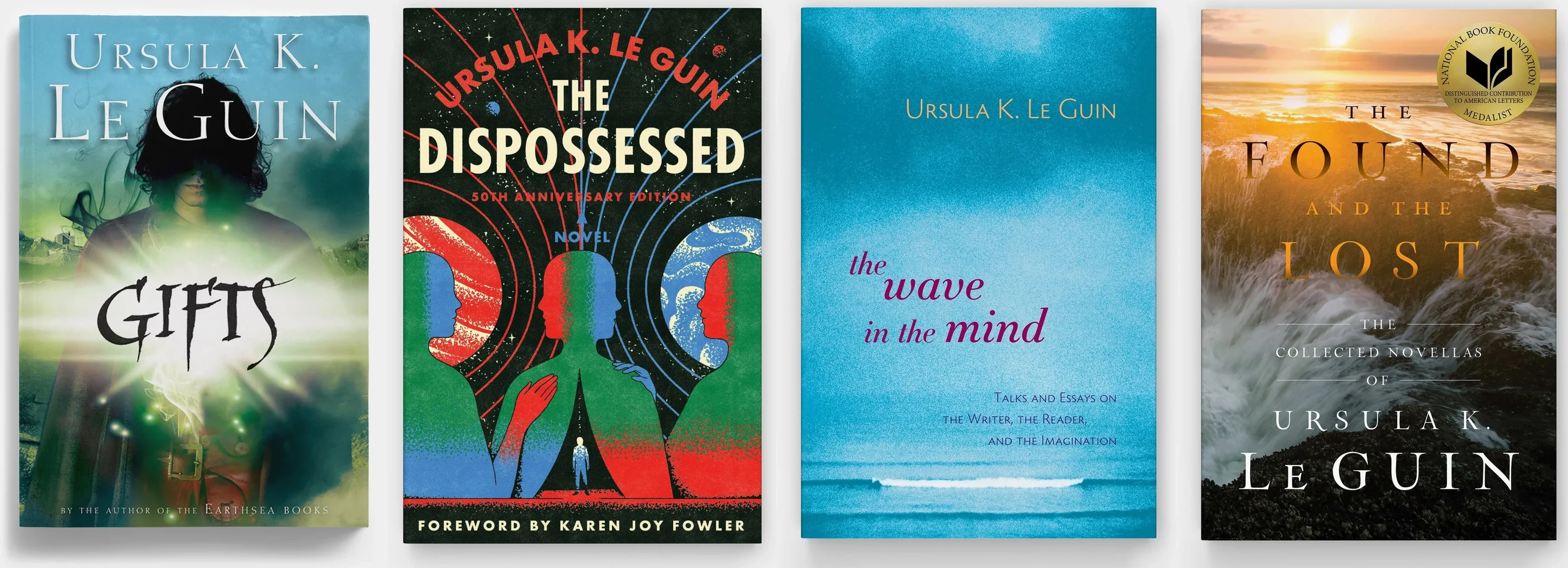
I read Le Guin’s “The Left Hand of Darkness” a couple years ago and it became one of my favorite books instantly. Since then I have read a great deal of her books and enjoyed nearly all of them. This year was no exception. I read “Gifts”, “The Dispossessed”, “The Wave in the Mind”, and “The Found and the Lost”. I enjoyed each one, but I enjoyed “The Found and the Lost” the most.
“The Dispossessed” is a future sci-fi in the same setting and taking place before “The Left Hand of Darkness”. Interesting about the book is how it has an anarchic society as just a setting. My experience with sci-fi is that alternative political structures are seen as either flawless, and so the book is preaching utopia; or more often fatally flawed, and so the book is preaching a cautionary tale. This book does not have that preachy feel. The system is presented as flawed, but the book ends with attempts at reform. The book ends with the viability of the political system uncertain. Le Guin is not trying to preach an alternative society, but exploring what real people might be like under a different political structure. So it feels very real and human.
“The Wave in the Mind” is a collection of non-fiction essays and speeches by Le Guin. I should very much like to read it again actually, as I fear most of the content has dropped out of my mind already. Next time I will read with a notebooks, as I remember there were many interesting insights and I cannot now recall a single one. “The Found and the Lost” is a collection of short stories by Le Guin. There is huge breadth in style and subject matter - it showcases the author’s range delightfully. My favorites were “Buffalo Gals, Won’t You Come Out Tonight” and “Paradises Lost”.
“Gifts” is actually the first book in another trilogy. Perhaps I will finish next year.

James C Scott is the author of “Seeing Like a State”. Since I read the book in 2019 I keep returning to it in my mind. So this year I decided to check out if he wrote anything else. I picked “Weapons of the Weak” and “In Praise of Floods” mostly at random. Both books are interesting and I am glad to have read them, but I doubt they will be as impactful on my thinking as “Seeing Like a State”.
“Weapons of the Weak” is a case-study of peasant class resistance in rural Malaysia. It details the effect of mechanization and double cropping (the “green revolution”) on one village. The most interesting insight among many was how mechanization divided society. Before mechanization large landowners relied on tenants and small landowners for labor during planting and harvesting. There was simply no way even a large family could manage alone. After mechanization this was no longer true. Large landowners no longer needed labor from the rest of the village, and it showed. Feasts given by the wealthy in the village to which the whole village was traditionally invited were commonplace before mechanization, but within a few years they became rare. The wealthy essentially no longer needed to participate in village life, and many did not.
“In Praise of Floods” is about rivers, not social systems or governments (though it does touch on both). The best parts of the book were the high-level perspectives on how rivers function, how maps are deceptive, and how long humans have been messing up their river habitats.
Urbanism

I only read two books on urbanism this year, a large shift from the last five years. My focus is more on practical aspects now. I feel I know the theory well enough. Implementation seems to be the sticking point. So I feel it is maybe more productive to read municipal codes and city council agendas over another street design book at this point.
Movement: How to Take Back our Streets and Transform our Lives by Thalia Verkade and Marco te Brömmelstroet was interesting because it was not written for a US audience for once. It is a book by Dutch authors for a Dutch audience, and shows that despite the view from here things are far from perfect in the Netherlands. The main insight I got from the book, obvious in retrospect, is that the focus on moving people large distances quickly is wrong. The way I often encounter transportation questions is in the relative trade-off of different transit modes. For a journey of 5 miles, should it be train, car, bicycle? This book points out could we instead make the city is such a way that people do not need to be travelling 5 miles as often.
Understanding Cairo, by David Sim, I picked up by accident. I was looking to see if David Sims, author of “Soft City”, had any other books. Despite not being the author I was looking for, the book is excellent. I would say a perfect follow-on for “Seeing Like a State”, mentioned above. It is a book on how Cairo succeeded in housing its citizens by the one simple trick of not demolishing their homes. How informal systems can function when left alone, how governments think and act, and how one of the largest cites in the world lives, works and moves around.
Top Picks


If I had to pick a top book this year it would be either “A Room of One’s Own” by Virginia Woolf, or “How to Hide an Empire” by Daniel Immerwahr. But since these are also the last two books I have read: there is a high chance of recency bias. All books mentioned above are recommended.
“A Room of One’s Own” has humor, insight and beautiful sentences. It is also short. Could be read in an afternoon.
“How to Hide an Empire” is a history of the much-overlooked US territories, colonies and overseas territories. It is well researched, fascinating and often infuriating. Sunlight cleanses, but US overseas possessions are rarely in the light. Neither on the map or in the news, the history is one of abuse and neglect.
All Books
| Fiction? | Format | Title | Author | Series |
|---|---|---|---|---|
| Fiction | Audio | The Found and the Lost | Ursula K Le Guin | |
| Nonfiction | Audio | The Wave in the Mind | Ursula K Le Guin | |
| Fiction | Audio | The Dispossessed | Ursula K Le Guin | Hainish Cycle |
| Fiction | Paper | Gifts | Ursula K Le Guin | Annals of the Western Shore |
| Nonfiction | Audio | In Praise of Floods | James C Scott | |
| Nonfiction | Audio | Weapons of the Weak | James C Scott | |
| Nonfiction | Audio | A Room of One’s Own | Virginia Woolf | |
| Nonfiction | Audio | How to Hide an Empire | Daniel Immerwahr | |
| Nonfiction | Paper | Safe Money in Tough Times | Johnathan Pound | |
| Nonfiction | Paper | Understanding Cairo | David Sim | |
| Nonfiction | Paper | Movement: How to Take Back our Streets and Transform our Lives | Thalia Verkade and Marco te Brömmelstroet | |
| Fiction | Audio | Cutting for Stone | Abraham Verghese | |
| Fiction | Audio | Dodger | Terry Pratchett | |
| Nonfiction | Audio | Elite Capture | Olúfẹ́mi O. Táíwò | |
| Nonfiction | Audio | Montessori: the Science Behind the Genius | Angeline Stoll Lillard | |
| Fiction | Audio | The Three Body Problem | Liu CiXin | |
| Nonfiction | Audio | The Guarantee | Natalie Forester | |
| Nonfiction | Audio | An Abolitionist Handbook | Patrisse Cullors | |
| Nonfiction | Audio | Untangled: Guiding Teenage Girls Through the Seven Transitions into Adulthood | Lisa Damour Ph.D. | |
| Fiction | Audio | A Tree Grows in Brooklyn | Betty Smith | |
| Fiction | Audio | David Copperfield | Charles Dickens | |
| Fiction | Audio | Binti | Nnedi Okorafor | Binti |
| Fiction | Audio | Binti: Home | Nnedi Okorafor | Binti |
| Fiction | Audio | Binti: The Night Masquerade | Nnedi Okorafor | Binti |
| Fiction | Audio | The Bear and the Nightingale | Katherine Arden | Winternight |
| Fiction | Audio | The Girl in the Tower | Katherine Arden | Winternight |
| Fiction | Audio | The Winter of the Witch | Katherine Arden | Winternight |
| Fiction | Audio | Oryx and Crake | Margret Atwood | MaddAddam |
| Fiction | Audio | The Year of the Flood | Margret Atwood | MaddAddam |
| Fiction | Audio | MaddAddam | Margret Atwood | MaddAddam |